
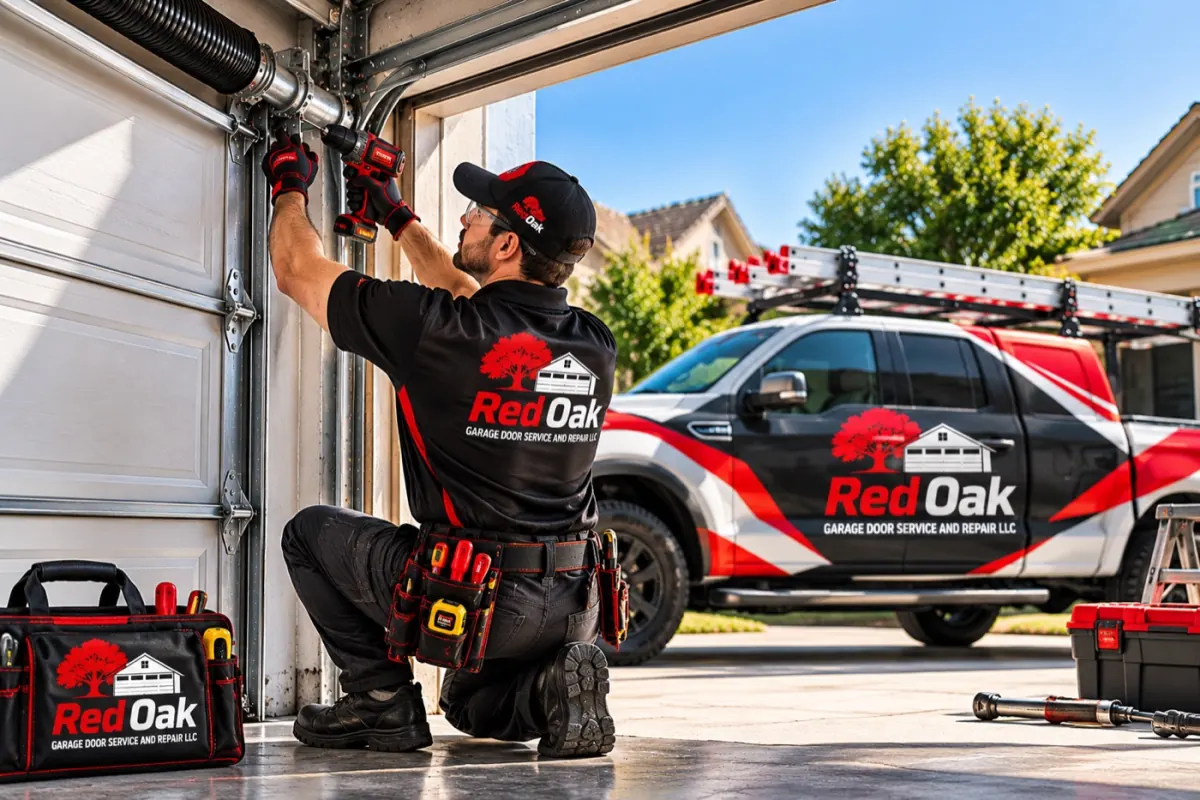
A garage door weather seal is the first line of defense against drafts, water, and insects, and when it wears out, you feel it in the garage and often in the rooms above it. In Northeast Ohio, that seal takes a beating from summer humidity, winter freeze-thaw cycles, and everything in between. Red Oak Garage Door Service and Repair LLC has been helping homeowners in Garfield Heights and the surrounding communities since 2009, and we've seen how a small strip of rubber or vinyl can make a big difference in comfort and energy use. This guide covers the three main types of seals — bottom, threshold, and side — what each one does, and how replacement works so you can decide whether to tackle it yourself or call a pro.
Why Your Garage Door Weather Seal Matters in Northeast Ohio
Your garage is usually the largest opening in your home, and it's also the one most exposed to the weather. A garage door weather seal fills the gaps around the perimeter and along the bottom, keeping outside air where it belongs. When that seal is cracked, flattened, or missing, hot summer air pours in, cold winter air follows, and your garage becomes a magnet for moisture and pests.
Ohio's climate is hard on seals. Summer heat softens rubber and vinyl, causing them to sag or tear. Winter cold makes them brittle, so they crack when the door cycles. Freeze-thaw cycles push water into small gaps, and that water expands when it freezes, widening the gaps further. Over time, a seal that looked fine in spring can be leaving a visible gap by fall.
The practical effects show up in a few ways: higher energy bills if your garage is attached and conditioned space above or beside it, a damp garage that smells musty, insects and mice finding their way in, and water pooling on the floor after a hard rain. A healthy seal won't solve every moisture problem, but it's the cheapest and most direct fix for most of them.
Fast local service across Garfield Heights and Greater Cleveland — free written estimate before any work.
The Three Main Types of Garage Door Seals
Not all weather seals are the same, and each type addresses a different part of the door opening. Understanding the difference helps you describe the problem accurately and choose the right replacement.
Bottom Seals
The bottom seal — sometimes called the astragal — is the rubber or vinyl strip that runs along the bottom edge of the door. It compresses against the floor when the door closes, sealing the largest gap in the system. Bottom seals come in several profiles: U-shaped, T-shaped, beaded, and bulb-style. The right profile depends on the door's bottom retainer, so it's worth checking what you have before buying a replacement. A worn bottom seal is the most common cause of drafts, water intrusion, and insects getting under the door.
Threshold Seals
A threshold seal is a raised strip that mounts to the garage floor, not the door. It creates a dam that water can't cross and gives the bottom seal a consistent surface to press against. Threshold seals are especially useful on older concrete floors that have settled or cracked, where the door can't make even contact. They're also a good choice if your driveway slopes toward the garage and rainwater tends to creep under the door.
Side and Top Seals
Side seals (also called jamb seals) run vertically along the door frame, and top seals run horizontally across the header. These are usually made of vinyl, rubber, or brush material and they close the gaps between the door and the frame. Side seals stop wind-driven rain and insects from entering along the edges, while the top seal keeps out drafts and debris. On many doors, the side and top seals are one continuous piece, but they can also be separate.
Signs Your Garage Door Weather Seal Needs Replacement
Seals don't usually fail all at once. They degrade gradually, and it's easy to stop noticing a problem that developed slowly. Here are the signs we look for during a service call:
- Visible cracks, tears, or missing chunks in the bottom or side seal.
- Daylight showing under or around the closed door — a clear sign of a gap.
- Water on the garage floor after rain or snowmelt, especially near the door.
- Drafts you can feel with your hand near the edges of the closed door.
- Insects or mice in the garage, particularly near the door opening.
- A flattened or hard seal that no longer springs back when you press it.
- Noise or vibration when the door closes, which can mean the seal is catching or dragging.
If you notice one or two of these, it's worth a closer look. If you notice several, replacement is probably overdue. In our experience, bottom seals in this part of Ohio often last five to ten years depending on sun exposure and how often the door cycles.
How to Replace a Garage Door Bottom Seal
Bottom seal replacement is the most common weather seal job, and it's one a handy homeowner can often do with basic tools. Here's the general process we follow:
- Identify the seal profile. Look at the bottom retainer and measure the door width. Match the profile — U-shaped, T-shaped, beaded, or bulb — and buy a seal long enough to cover the full width plus a little extra.
- Open the door partway so you can reach the bottom edge comfortably, and disconnect the opener if you have one so the door stays put.
- Remove the old seal. Slide it out of the retainer or pull it free. If it's stuck, a flat-head screwdriver helps, but work carefully to avoid bending the retainer.
- Clean the retainer. Wipe out dirt and debris so the new seal seats fully.
- Install the new seal. Slide it into the retainer from one end, or feed it along the track depending on the style. Trim the ends square with a utility knife.
- Test the fit. Close the door and check for even contact with the floor. If there are gaps, the door may need adjustment, or a threshold seal may be the better fix.
If your door has a complicated retainer, or if the bottom edge is damaged, it's worth having a technician look at it. Our garage door repair team handles seal replacements along with any related adjustments.
Threshold and Side Seal Replacement Tips
Threshold seals and side seals are a bit different from bottom seals, and each has its own installation considerations.
Threshold seals mount to the concrete floor with adhesive and screws. The key is surface preparation: the floor must be clean and dry, and any cracks or uneven spots should be addressed first. A threshold seal that isn't seated properly will peel up or let water underneath. If your floor is badly cracked or sloping, a threshold seal may not be enough on its own, and we'd look at whether the door itself needs adjustment.
Side seals attach to the door frame or the door jamb, depending on the style. Vinyl and rubber side seals slide into a retainer or nail to the frame, while brush seals are better for irregular gaps. The most common mistake is installing them too tight, which causes the door to rub and can wear out the seal quickly. The seal should make contact without dragging.
Top seals are usually the easiest — they attach to the header and press against the top of the door. If you're replacing side seals, it often makes sense to replace the top seal at the same time, especially if they're part of one continuous piece.
When to Call a Professional for Weather Seal Replacement
Many homeowners can handle a simple bottom seal swap, but some situations call for a professional. If your door is out of alignment, the bottom edge is bent, or the retainer is damaged, a new seal won't fix the underlying problem. Similarly, if you've replaced the seal and still feel drafts or see water, the issue may be the door's balance, track alignment, or the floor itself.
We also recommend professional service if your door has a torsion spring system and you need to adjust the door's travel or tension to get proper seal contact. Springs are under high tension and are dangerous to work on without the right tools and experience. Our team can replace seals and check the door's overall operation at the same time, so you're not chasing problems one at a time. If you'd like a professional assessment, you can request a free quote or call us at (216) 395-1738.
Maintaining Your Seals After Replacement
A new seal will last longer if you take a few simple steps. Keep the seal clean — dirt and grit wear it down faster. In winter, avoid letting snow and ice build up against the bottom of the door. Lubricate the seal lightly with a silicone-based product (not oil-based, which can degrade rubber) a couple of times a year. And check the seal each season for cracks or gaps, especially in spring and fall when temperatures swing.
If you have your door tuned up regularly, ask the technician to check the seals while they're there. Our maintenance and tune-ups service includes a look at the door's weather sealing, along with lubrication and hardware checks. It's an easy way to catch small seal problems before they turn into water damage or pest issues.
FAQ
How often should I replace my garage door weather seal?
In Northeast Ohio, most bottom seals last about five to ten years, depending on sun exposure and use. Side and top seals can last longer, but check them each season for cracks or gaps. If you see daylight or feel drafts, replace the seal regardless of age.
Can I replace a garage door bottom seal myself?
Yes, if you're comfortable with basic tools and your door has a standard retainer. The key is matching the seal profile and door width. If the retainer is damaged or the door is out of alignment, it's better to have a technician handle it.
What's the difference between a bottom seal and a threshold seal?
A bottom seal attaches to the door and presses against the floor. A threshold seal mounts to the floor and creates a raised barrier. Threshold seals are helpful on uneven or cracked floors and where water tends to pool near the door.
Will a new weather seal keep insects out of my garage?
A properly fitted bottom, side, and top seal will close the gaps that insects and mice use to get in. If you still have pests after replacing the seals, check for gaps elsewhere, such as around vents or the garage-to-house door.
Do you offer weather seal replacement in my area?
We serve Garfield Heights and communities across Greater Cleveland, including Maple Heights, Bedford, Parma, Cleveland Heights, and many others. See our service area for the full list, or call us at (216) 395-1738 to schedule.